GRAND DÉBUTANT / ONL / SUNDAY 10-04-26 | online-group-classes
SIGNATURE CLASS | GRAND DÉBUTANT
LEVEL 2

SUNDAYS

OCT 4 - DEC 13

TIME:
12:00PM - 1:25PM ( ET )
DURATION:
10 WEEKS
PROF:

Aurélien was born in Le Chesnay, near Versailles, and raised in Montpellier, south of France. After completing his degree in filmmaking (production and direction) in Minneapolis, he moved to LA in 2020 by way of Boston, Paris and New York. Aurélien joined Coucou in 2019 and is passionate about cinema, sports and loves traveling. He’s a talented basketball player and margarita maker!

LOCATION:

Via Zoom or Google Meet. You will find your meeting link in your student portal.

CLASS DESCRIPTION:

This class expands your control of the present tense and introduces the verb patterns and grammar structures that make everyday French much more flexible.

TOTAL:
$299.00

WHAT YOU’LL LEARN IN THIS LEVEL

Level 2 expands your control of the present tense and introduces the verb patterns and grammar structures that make everyday French much more flexible.

ASK QUESTIONS AND EXPRESS WHAT YOU NEED

  • Three ways to ask yes-or-no questions, plus the main question words
  • Modal verbs: pouvoir, vouloir, and devoir
  • The difference between the 2 verbs to say “to know”: savoir and connaître

SEE THE PATTERNS IN IRREGULAR VERBS

  • The prendre, venir, and tenir families
  • The partir, mettre, and attendre families
  • The finir, lire, and écrire families
  • Venir de + infinitive to talk about what just happened

USE REFLEXIVE AND RECIPROCAL VERBS

  • Reflexive verbs for daily routines and actions you do to yourself
  • Reciprocal verbs for what people do to each other
  • Common pronominal verbs used in everyday conversation

GET MORE PRECISE WITH ARTICLES, QUANTITY, AND NEGATION

  • C’est vs. il / elle est for identifying and describing people and things
  • Definite, indefinite, and partitive articles
  • Expressions of quantity and the use of de
  • Negative expressions beyond ne… pas

START TALKING ABOUT THE PAST

  • The passé composé with avoir
  • Regular past participles
  • Time expressions for talking about when something happened

USE FRENCH IN EVERYDAY SITUATIONS

  • Ordering food and navigating a restaurant
  • Asking for and giving directions
  • Talking about daily routines and everyday interactions
WEEK BY WEEK
Lesson 1: Asking Questions

You’ll learn three ways to ask a yes-or-no question in French, then add the main question words for “where,” “when,” “why,” “how,” “how much,” “who,” and “what.” That gives you what you need to ask someone else about their life, not just talk about your own.

Lesson 2: Modal Verbs

Pouvoir, vouloir, and devoir cover “can,” “want,” and “have to,” and each one is followed by another verb. You’ll also learn the difference between savoir and connaître, the two French verbs that can both mean “to know.”

Lesson 3: prendre, venir and Their Families

This lesson uses prendre, venir, and tenir as models for several irregular verb families. You’ll also learn venir de plus an infinitive, the structure French uses to say that something just happened.

Lesson 4: c’est vs. il/elle est

C’est or il est? Both can translate as “it is,” but the choice depends on what comes next. You’ll learn when French uses each one when identifying or describing a person, place, or thing.

Lesson 5: Choosing the Right Article

This lesson adds the partitive articles du, de la, and des, which French uses when talking about an unspecified amount of something, especially food and drink. You’ll also look at how verbs like “to like” and “to eat” can change the article that follows.

Lesson 6: Expressing Quantity

Once you name a quantity, French changes the article that follows: a lot of time, a kilo of apples, a cup of tea. You’ll practice the rule with restaurant vocabulary, so you can use it while ordering and talking about food.

Lesson 7: Irregular Verbs in the Present

This lesson groups irregular verbs by how they behave, using a handful of model verbs to cover larger families. You’ll work with common verbs like partir (to leave), dormir (to sleep), mettre (to put), attendre (to wait), lire (to read) and écrire (to write).

Lesson 8: Reflexive Verbs

Reflexive verbs cover a lot of everyday actions, from waking up and getting dressed to hurrying and going to bed. You’ll learn how the structure works, then use it for reciprocal actions too, like meeting each other or getting along.

Lesson 9: Negative Expressions

This lesson goes beyond ne… pas with ways to say “never,” “nothing,” “nobody,” “no longer,” “nowhere,” “only,” and more. You’ll also work with voir and croire and the different French verbs used for ideas like “to think” and “to believe.”

Lesson 10: The passé composé

This lesson introduces the passé composé, a past tense used to talk about completed actions. You’ll learn how to build it with avoir and a past participle, then use it to talk about what happened yesterday, last week, or over the weekend.

WHAT’S INCLUDED
Cover of Coucou course book level 2
Course Book PDF
Value: $25

10 structured lessons with clear explanations, pronunciation guidance, exercises, and interactive class activities.

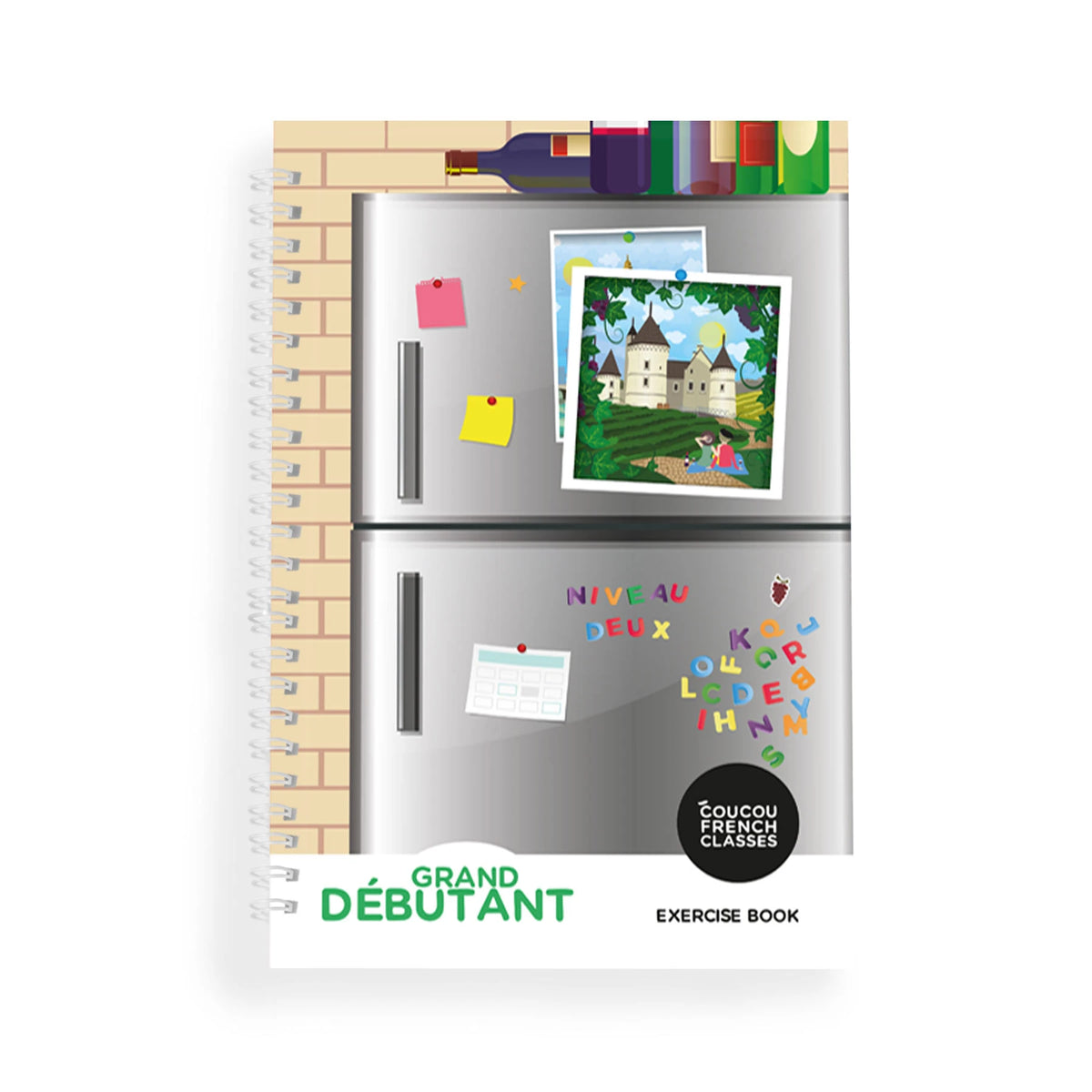
Cover of Coucou exercise book level 2
Exercise Book PDF
Value: $35

Additional practice designed for self-study between classes to reinforce verb patterns and grammar concepts.

WHAT STUDENTS ARE SAYING

★★★★★

The classes are well-structured, consistent, and full of helpful information. I truly love it and can't wait to continue!

★★★★★

I have taken French classes elsewhere in the city and felt flustered, but there is nothing intimidating about learning at Coucou.

★★★★★

BRILLIANT!!!!

Every week I can't wait for Tuesday to come around to go to my Coucou french class.

FAQs
What if I miss a class?

You’ll have access to make-up videos in your Student Portal. Each video becomes available at the scheduled time of the class you miss and covers the same lesson material, so you can easily catch up and stay on track. Please note that these are archived lesson recordings, not recordings of your specific class.

What happens if I want to change my class?

Because our classes are small, fixed groups, we reserve your spot for the entire course and may not be able to fill it if you drop out. That's why your options for changing your class depend on how far in advance you let us know:

  • 30+ days before class starts: Request a full refund or transfer to another Signature Class at no cost.
  • 15–29 days before class starts: Request the full value of your registration in store credit.
  • Less than 15 days before class starts, or after the class has begun: Your registration is final, and refunds, credits, and transfers aren't available.
How many students are in the class?

Signature Classes have a capacity of 10–12 students per group, with groups ranging from 4–12 students depending on enrollment.

What should I take after finishing a signature class?

Keep the momentum going! After finishing your Signature Class, we recommend taking at least 5 Conversation Labs at the level you just completed to practice and solidify what you’ve learned.

can I pay in installments?

Yes! You can choose to pay in installments at checkout.

Gradient vivid colors

NOT SURE THIS IS
THE RIGHT LEVEL FOR YOU?

Take our placement test to see where you fit in the 7-level Coucou Method™.

Or ask our Student Concierge for help choosing the right Signature Class.