
Back-to-school season is instantly recognizable on both sides of the Atlantic: fresh notebooks, new teachers, new routines, and that sudden realization that summer is officially over.
But if you grew up going to school in the United States, “la rentrée” (literally re-entering) in France can feel surprisingly different.
French students aren’t just buying supplies. They’re choosing an agenda, covering textbooks, labeling notebooks, preparing a carefully stocked pencil case, and finding out which classmates they’ll spend most of the year with.
Of course, no two schools are exactly alike, and practices vary in both France and the US. But some habits are common enough that the contrast can be pretty striking.
And it starts before the first day of school even arrives.
Preparing for la rentrée
The all-important liste des fournitures scolaires
American parents are certainly familiar with school-supply lists. But in France, la liste des fournitures scolaires can sometimes feel more like a set of very precise instructions.
Depending on the teacher and subject, students may be asked to bring a particular notebook size, type of paper, binder, pen color, folder, or set of supplies.
There’s a little less room for the classic “three generic spiral notebooks and we’ll figure it out later” approach.
A few French back-to-school essentials deserve special mention.
L’agenda
The French agenda is much more than a planner.
Students use it to write down homework, tests, assignments, reminders, and important dates. Before online school platforms became widespread, it was also one of the main links between home and school.
But there’s a social side to it too. Especially in middle school, your agenda can become a tiny reflection of your personality: doodles, stickers, photos, messages from friends, or a carefully chosen cover. What starts as an organizational tool can quickly turn into a miniature scrapbook of the school year.
Le cartable
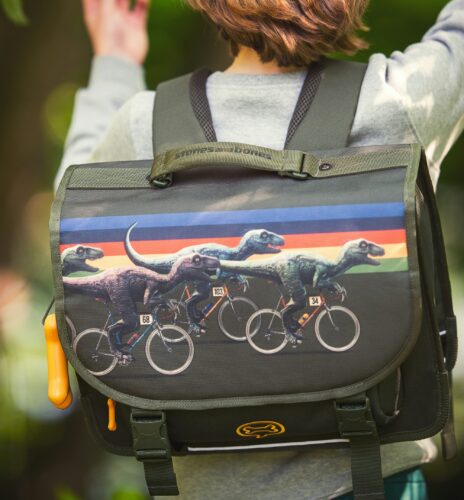
Then there’s le cartable: the schoolbag.
For younger students especially, choosing the right cartable can be a major back-to-school moment. Color, brand, shape, and characters all matter, and, just like backpacks in the US, your choice can carry a certain amount of playground social currency.
By middle school, backpacks become more common, but le cartable remains one of the most iconic symbols of la rentrée.
Le papier à carreaux
One of the biggest visual differences between French and American schoolwork becomes obvious the moment you open a notebook.
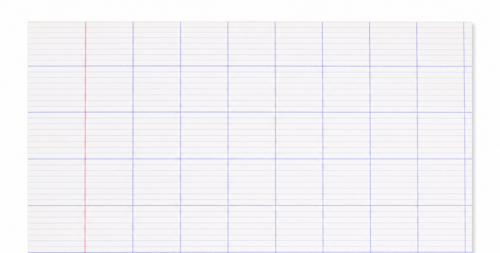
French students often write on papier à grands carreaux, also known as papier Seyès: paper covered in a distinctive grid of large squares divided by smaller lines. It’s designed to help students control the height, spacing, and shape of their handwriting.
If you grew up in the US using wide-ruled or college-ruled paper, opening a French notebook for the first time can feel a little like someone has accidentally handed you graph paper. To a French student, it’s completely ordinary.
There is also le papier à petits carreaux, in this case the squares are exactly half a centimeter and the page is just a big grid, making it a Math teachers’ favorite.
Papier à grands carreaux
Le stylo plume
Yes, French children really do learn to use fountain pens. The stylo plume has long been a staple of French classrooms, particularly once students have developed their handwriting. Many students use erasable blue ink cartridges, which makes the whole process considerably less risky than it sounds.
Fountain pens aren’t as universally required today as they once were, but they’re still strongly associated with French school life.
And naturally, you need somewhere to keep all those pens.
La trousse
Enter la trousse, the pencil case. Pens, pencils, eraser, ruler, highlighters, fountain-pen cartridges, correction tools… A well-stocked French trousse can start to look like a portable stationery store.
And once again, it isn’t purely practical. Choosing your pencil case is another small but very real opportunity to show a bit of personality before the school year begins.
The ritual of covering your books
Before school starts, or shortly after textbooks are handed out, many French families take on another annual ritual: couvrir les livres. That means wrapping school textbooks in clear protective plastic so they make it through the year relatively intact. Then comes the labeling. Name. Class. Subject.
Several books. Possibly several children. Possibly one increasingly frustrated parent surrounded by rolls of plastic late at night. For generations of French families, covering textbooks has been practically synonymous with September.
And then, finally, comes the first day.
The French notebook page de garde
A blank notebook usually doesn’t stay blank for very long. In many French classrooms, students begin each new notebook with a carefully prepared page de garde: a title page for the subject. Each subject has its own cahier (notebook).
Students may decorate it, illustrate it, or simply write the subject neatly along with their name, class, and school year. It’s a small but very recognizable French back-to-school ritual: before you start learning, you properly introduce the notebook.
The first-day name sign
Teachers may also ask students to create a folded paper sign displaying their first name and place it on their desk. It’s essentially a DIY nameplate that helps the teacher learn everyone’s names. Simple, practical, and a little different from the elaborate icebreakers American students sometimes encounter on the first day.
No locker? Welcome to France.
One of the more noticeable adjustments for students familiar with American middle and high schools is the relative absence of individual hallway lockers in many French schools. There are exceptions, of course, but the classic American routine of stopping at your locker between classes is much less central to French school life.
Which also helps explain something else: That very full backpack. French students may need to carry much of what they need throughout the day with them, books, notebooks, pencil case, agenda, and sometimes sports gear. So the cartable isn’t just a style choice. It’s doing a lot of work. Not to mention that French people are introduced to back pain at a young age!
One class, together
Another major difference is the concept of la classe. In many American middle and high schools, students build individual schedules. You might see one group of classmates in English, another in math, and another in history.
In France, students are traditionally assigned to a class group—say, 6e B or 4e A—and spend much of the school day with that same group. The teachers change according to the subject, but the class group itself remains relatively stable. As a result, ma classe means more than your grade level. It’s a specific group of students you see again and again, often for the entire academic year. For the school picture, it’s then customary that a class poses together, usually in the courtyard.
Which is great if you love your class. And perhaps a little more complicated if you don’t.

A traditional class photo… But with our NYC Coucou teachers!
Le professeur principal
Because students belong to a defined class group, starting in middle school they also usually have a professeur principal. This teacher acts as a kind of academic point person for the class. They follow students’ overall progress, communicate important information, help coordinate between teachers, and often become an important contact for families.
There isn’t a perfect American equivalent. You can think of the role as somewhere between a homeroom teacher, advisor, and academic coordinator.
The school gym is… different
If your mental image of school includes huge football fields, bleachers, basketball courts, running tracks, weight rooms, and a school mascot painted across the gym floor, many French schools may feel comparatively modest.
French students absolutely have EPS — éducation physique et sportive, or PE. But schools don’t always have the kind of large-scale sports infrastructure associated with many American campuses. Depending on the school, students might walk or travel to a municipal gym, swimming pool, running track, or sports field for certain activities.
School sports are also generally less central to French school identity. There’s no exact equivalent of the American high-school-sports ecosystem of varsity jackets, marching bands, pep rallies, homecoming, and Friday-night football games.
And then comes le goûter
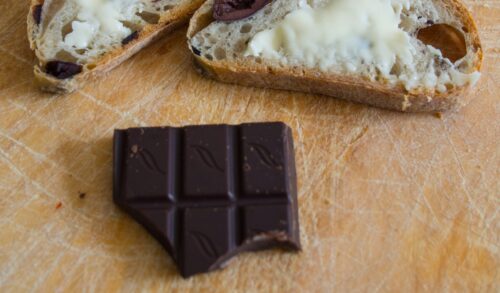
Perhaps one of the nicest parts of the French school day happens when school is over, when children often have le goûter: an afternoon snack. It might be packaged cookies, fruit, a yogurt drink, or something picked up from the local bakery.
And then there’s one particularly nostalgic French classic: a piece of baguette with a few squares of chocolate tucked inside. Not to be confused, of course, with un pain au chocolat (or chocolatine in the South West) the buttery pastry filled with chocolate.
Even school vacations work differently
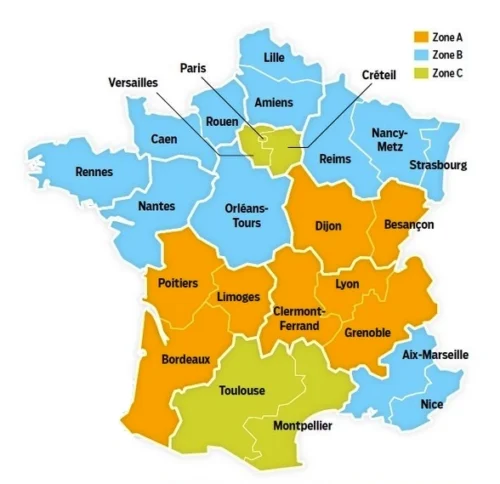
French school holidays introduce one final system that often puzzles newcomers: les zones scolaires. Metropolitan France is divided into three school zones: A, B, and C. Certain holidays, particularly winter and spring breaks, are staggered depending on the zone.
Why? Among other reasons, spreading vacation dates across several weeks helps prevent the entire country from heading toward ski resorts, highways, and holiday destinations at exactly the same time.
Summer and Christmas holidays are generally shared nationwide, but during other parts of the year, asking “Tu es en vacances quand ?” may require knowing where someone lives.
Ça y est ! C’est la rentrée !
Whether you grew up with lockers and yellow school buses or cartables and goûters, back-to-school traditions say a lot about a country’s culture. And in France, la rentrée is a whole world of its own, one worth getting to know beyond the vocabulary. And since a lot of French adults take their summer vacations in August, September means la rentrée for them as well!