Another World Cup is upon us! It takes place in the US, Canada, and Mexico, with matches in Coucou’s own backyard, AKA New Jersey. France won twice before, in 1998, and in 2018, so we have high hopes for a third victory!
First and foremost, let’s make something clear: in this post, we will refer to the sport as football, not soccer! Or as the French love to call it “le foot”!
And in France, “le foot, c’est la vie!” Football is life. With big personalities (and by that we mean egos), misunderstandings and rivalries, and passionate fans, you have the perfect recipe for a very hot French dish.
That’s why any drama or scandal usually has repercussions beyond the sport itself and becomes a national conversation, easily turned into political theater.
So without further ado, here is a top 10 list of the drama and scandals that shook the French Football Federation, and the nation:
-
The VA-OM bribery scandal, or Marseille’s tarnished glory
Money, money, money! A key element in football worldwide, and France is not immune to a good bribery scandal, especially when businessman and Marseille team owner Bernard Tapie was in charge. L’Olympique de Marseille (l’OM) is one of the most talented and storied teams in France, with a ride-or-die fanbase, and a legendary rivalry with the Paris Saint Germain (PSG).
In 1993, l’OM became the first French club to win the Champions League. A major achievement unfortunately forever entangled with one of the sport’s most infamous corruption cases.
Just days before the Champions League final against AC Milan, Marseille was accused of bribing players from Valenciennes (another French team) to take it easy in a league match. The goal was not necessarily to win the game, Marseille was already powerful enough, but to avoid injuries and fatigue before the European final. Valenciennes player Jacques Glassmann refused the bribe and exposed the plot. Marseille’s 1992–93 French league title was later stripped, and club president Bernard Tapie was convicted of corruption and sentenced to 2 years in prison. He ended up serving 6 months.
By the way, you can watch a short biopic about Bernard Tapie’s beginnings as a TV salesman in the 60s on 6pm in Paris: https://6pminparis.com/course/sous-les-paves
-
South Africa 2010, the World Cup debacle
If one event sums up the phrase “drame national,” it is the 2010 World Cup.
Everything unraveled after France’s 2–0 loss to Mexico. Star player Nicolas Anelka allegedly insulted coach Raymond Domenech at halftime. A major French sports paper broke the news of the locker room argument and printed a quote of the insults Anelka supposedly directed at his coach as its headline. As a result, Anelka was suspended and immediately sent back to France.
The rest of the team then refused to train in protest, staying on the team bus while the world watched, with journalists and TV cameras following their every move.
It was a PR disaster: players sulking on a bus, a coach powerless, a captain arguing with staff, and an entire nation wondering how the team that won the 1998 World Cup had come to this.
The French public, not understanding their motive, called them millionaire crybabies. Wealthy young men who refused to do their job at the most important event of their sport with a whole country pinning their hopes and dreams on them: not a good look. Even though the French love nothing more than a strike, this one left a bitter taste in their mouth and prompted a political cataclysm.
To top it all off, France crashed out in the group stage. It was a total meltdown that turned into a national humiliation.
A fascinating new documentary, The Bus: A French Football Mutiny, on Netflix, investigates the event and its fallout in depth and questions the veracity of the quote in the newspaper headline that got Anelka sacked.
-
Zidane’s headbutt, ending a legendary career on a bad move
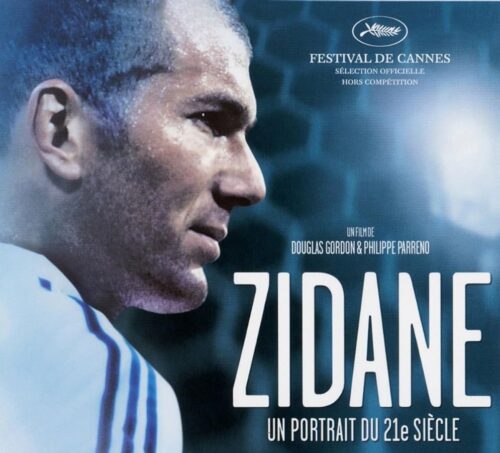
July 9, 2006. World Cup final. France vs. Italy. French superstar Zinedine Zidane, playing the final match of his career, had already scored an incredible penalty. France was dreaming of another World title.
Then came Marco Materazzi. Then the words. Then the walk. Then the headbutt.
Zidane drove his head into Materazzi’s chest in extra time and was sent off. Italy went on to win the final on penalties. What makes it unforgettable, and deeply painful, is not just the aggression; it is the tragedy of ending an outstanding career on such a note. Zidane was France’s hero, the artist of 1998, the symbol of an entire generation. And his final image as a player was not a trophy lift, but a red card. Greek tragedies have nothing on French football!
-
Thierry Henry’s handball against Ireland, or “Le Hand of God”
France’s turn in the 2010 World Cup was already marred by controversy before they even got to South Africa!
In 2009, “les Bleus” faced the Republic of Ireland in a World Cup qualifying playoff. The stakes were enormous: a place at the 2010 World Cup.
In extra time, Thierry Henry controlled the ball with his hand before crossing to William Gallas, who scored the goal that sent France through. Ireland was furious. Henry admitted after the match that he had handled the ball, and the incident triggered a massive debate about fair play, video review, and whether the game should be replayed. FIFA ultimately said there was no legal basis to sanction Henry.
For French fans, it was awkward. France qualified, but not in a way anyone wanted to brag about. Henry, normally one of the sport’s classiest figures and most talented players, suddenly became “the villain of Dublin.”
In hindsight, this was just the beginning of a disastrous episode for the national French team.
-
The Benzema-Valbuena blackmail affair
This was not just a locker-room feud. It became a legal case, a media storm, and a long-term fracture inside the French national team.
In 2015, Karim Benzema, one of the best French strikers, and arguably one of the best center-forwards of his generation, was accused of involvement in an attempt to blackmail his France teammate Mathieu Valbuena over a sex tape. Benzema denied wrongdoing, but the case dragged on for years. In 2021, a French court found him guilty of complicity in attempted blackmail, gave him a one-year suspended sentence, and fined him €75,000.
The high-profile scandal affected both players, and the sporting consequences were enormous. Benzema was kept away from the national team for years, missing Euro 2016, the 2018 World Cup victory, and a huge chapter of Les Bleus history.
Photo by Chaos Soccer Gear on Unsplash
-
The FFF “quota” scandal
In 2011, French football was rocked by reports that senior figures had discussed limiting the number of young dual-nationality players in training academies. The controversy quickly became a national debate about immigration, Frenchness, and who gets to represent the country.
Laurent Blanc, then France coach, was caught in the controversy after reported transcripts suggested discussion around quotas and concerns about academy players choosing other national teams. Blanc was later cleared by an internal investigation, but the damage was already done.
The scandal cut deep because the French national team has always carried symbolic weight. The 1998 World Cup-winning team was celebrated as Black-Blanc-Beur, meaning players were of diverse backgrounds and heritage, including Northern and Sub-Saharan Africa. It was a proud vision of multicultural France. The quota scandal exposed how fragile that ideal could be.
-
Eric Cantona’s kung-fu kick
Technically, this happened in England. Spiritually, it belongs in any history of French football drama because it involves one of the biggest football stars of the 90s, Eric Cantona. A powerful player whose temperament is as famous as his skills on the pitch.
In 1995, Cantona, playing for Manchester United, received a red card against Crystal Palace. As he walked toward the locker room, he launched a kung-fu-style kick at a Crystal Palace fan. The incident stunned the football world. Cantona received an eight-month ban, faced criminal proceedings, and, according to accounts of the case, never played for the French national team again.
Cantona was already a myth: brilliant, arrogant, philosophical, impossible to manage. Then, during the press conference following the match, he famously stated: “When the seagulls follow the trawler, it is because they think sardines will be thrown into the sea.” With a mind like his, who needs media training? Everybody scratched their heads, and the quote remained part of his lore.
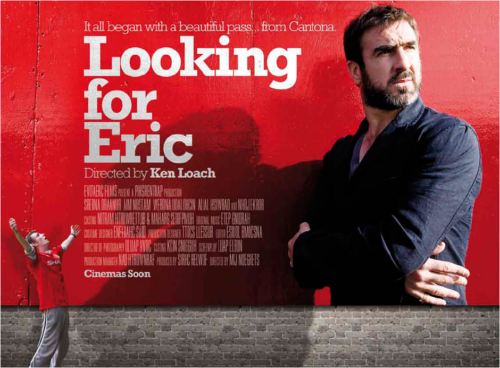
He went on to be a commentator and an actor, playing, among other varied roles, a fictional version of himself in the dramedy “Looking for Eric” by acclaimed British filmmaker Ken Loach, presented at the Cannes Film Festival.
-
The underage prostitution scandal
It was as serious as it sounds. And, at this point, you can probably guess the timeline. It indeed happened just before the 2010 World Cup.
Several French players were linked to a prostitution investigation involving Zahia Dehar, who was a minor at the time of some of the alleged events. Star players Franck Ribéry and Karim Benzema were later tried on charges of soliciting an underage girl. Both were acquitted in 2014, with the court finding the players were not aware she was underage. Other defendants in the broader case were convicted of pimping-related offenses.
The affair was as explosive as you could expect. It fed into a broader sense that Les Bleus were entering the 2010 World Cup surrounded by chaos, ego, and scandal.
The media dubbed it “the Zahia Affair,” placing the spotlight on her, a teenage girl, rather than on the adult men, including famous ones, involved in the case. She went on to become a model, actress, and advocate. She starred in the film “An Easy Girl” by French feminist auteur Rebecca Zlotowski, available on Netflix.
-
Noel Le Graet and the FFF crisis
Noël Le Graët led the French Football Federation for more than a decade, including during France’s 2018 World Cup win. But his reign ended in crisis.
In 2023, he resigned as FFF president following a government audit and a damning report that questioned his legitimacy to continue in the role, and public accusations of sexual and moral harassment. He denied wrongdoing, and French prosecutors later dropped a harassment investigation due to insufficient evidence.
The scandal mattered because it was not about one match or one player. It was about the institution running French football, and its treatment of women. It also arrived at a time when France was hugely successful on the field, reminding everyone that trophies do not automatically mean healthy governance.
-
The Pogba extortion affair, family drama meets World Cup pressure
In 2022, just months before the World Cup, Paul Pogba, one of the most talented midfielders of the French team, became the center of a bizarre and disturbing extortion case involving childhood friends and his own brother, Mathias Pogba.
Paul Pogba said he had been targeted by an organized group demanding money. The story included threats, accusations, family conflict, and media leaks. In December 2024, six men, including Mathias Pogba, were sentenced in the attempted extortion case. Mathias received a three-year sentence, two years suspended, and a fine.
Pogba ultimately missed the 2022 World Cup through injury, while France reached the final without him. But the case added a dark layer to the end of his Les Bleus era: one of France’s most charismatic midfielders caught between physical setbacks and an almost operatic personal scandal.
Are you ready for the 2026 World Cup?
Will you cheer for “les Bleus”? We sure will! We can’t help but root for them, in all their glory and their messiness.
Eléonore Martin